Hair Pattern Filters
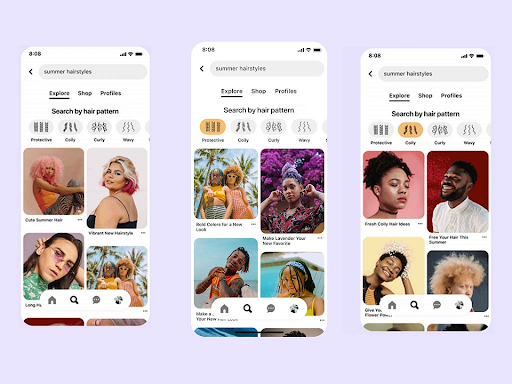
“We chose 'pattern' over 'texture' deliberately — one is descriptive, the other carries baggage.”
Product Designer
2021–2022
Consumer Design · Inclusive Design · Cross-Platform
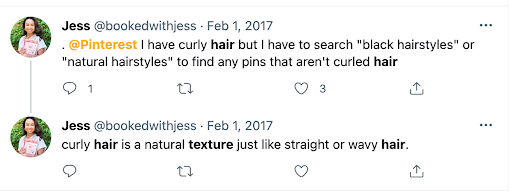
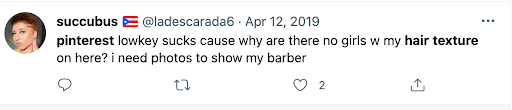
Pinterest was seeing dwindling engagement from BIPOC users. Research showed a clear signal: many felt the product wasn't designed for people who looked like them. They had to add qualifiers to every search — a cognitive and emotional burden that straight-haired users never experienced. The problem wasn't just representation in results. It was that users had to explain themselves to use the product.
Research
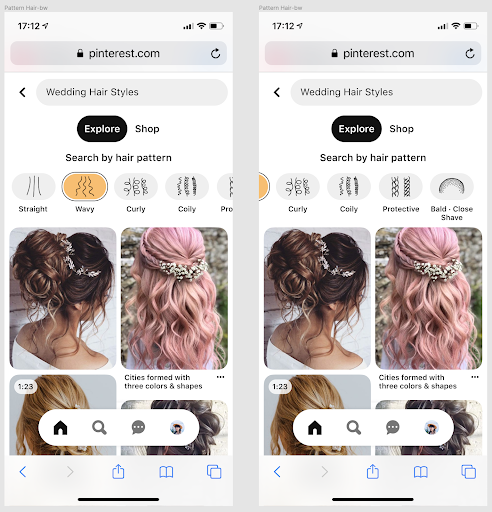
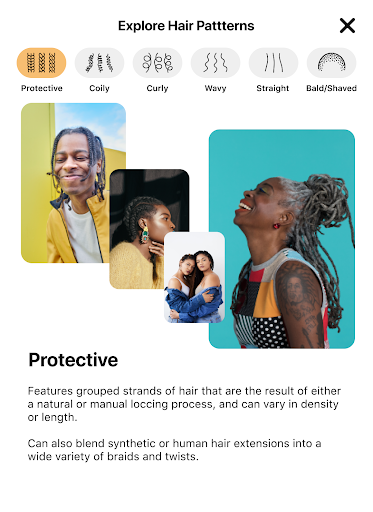
User research surfaced the specific friction points: users were modifying searches manually, feeling unseen in default results, and abandoning sessions. We mapped the hair pattern taxonomy — defining what categories existed, what language to use, and how they mapped to actual search behavior.
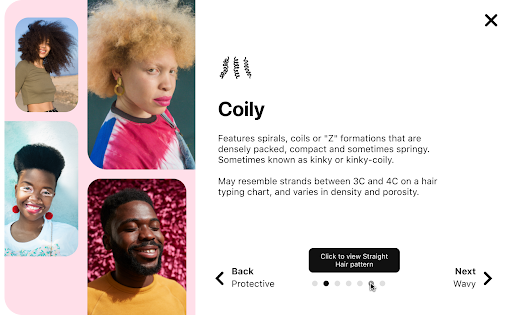
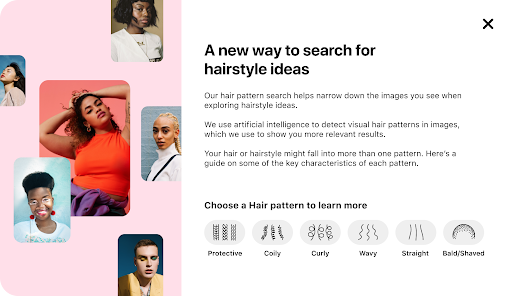
Taxonomy
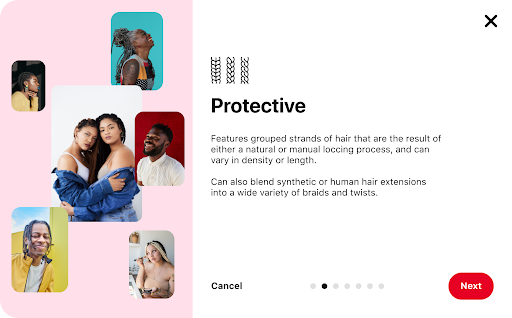
Defining the categories was the hardest part — too few and it's not useful, too many and it's overwhelming. We landed on a system that covered the major pattern types while remaining approachable.
Implementation
Shipped across iOS, Android, and desktop. The filter system integrated into existing search without requiring users to opt-in to a separate 'inclusive mode' — it was just search, made better.
User feedback
Qualitative signals validated the approach — users who had felt unseen in search were finding relevant content without needing to modify their queries.
- 100K+ daily users
- 93K weekly active users increase for the topic picker feature
- Shipped across iOS, Android, and desktop
- Featured internally as a model for inclusive design at scale